Healing Guide
How to Care for Your New Tattoo — Aftercare Guide
Your tattoo is an open wound. How you treat it in the first few weeks determines whether it heals crisp and vibrant or faded and patchy. This tattoo aftercare guide covers exactly what to do (and what to avoid) from the first hours through full healing at 6-8 weeks.
These tattoo aftercare tips come directly from our tattoo shop Minneapolis artists, aligned with guidance from the American Academy of Dermatology. Knowing how to care for a new tattoo makes all the difference.
Your 4-Step Aftercare Routine
Follow these four steps consistently for proper tattoo aftercare. Your artist will recommend specific products suited to your skin type.
Step 1
Remove Your Bandage
2-4 hours after your tattoo
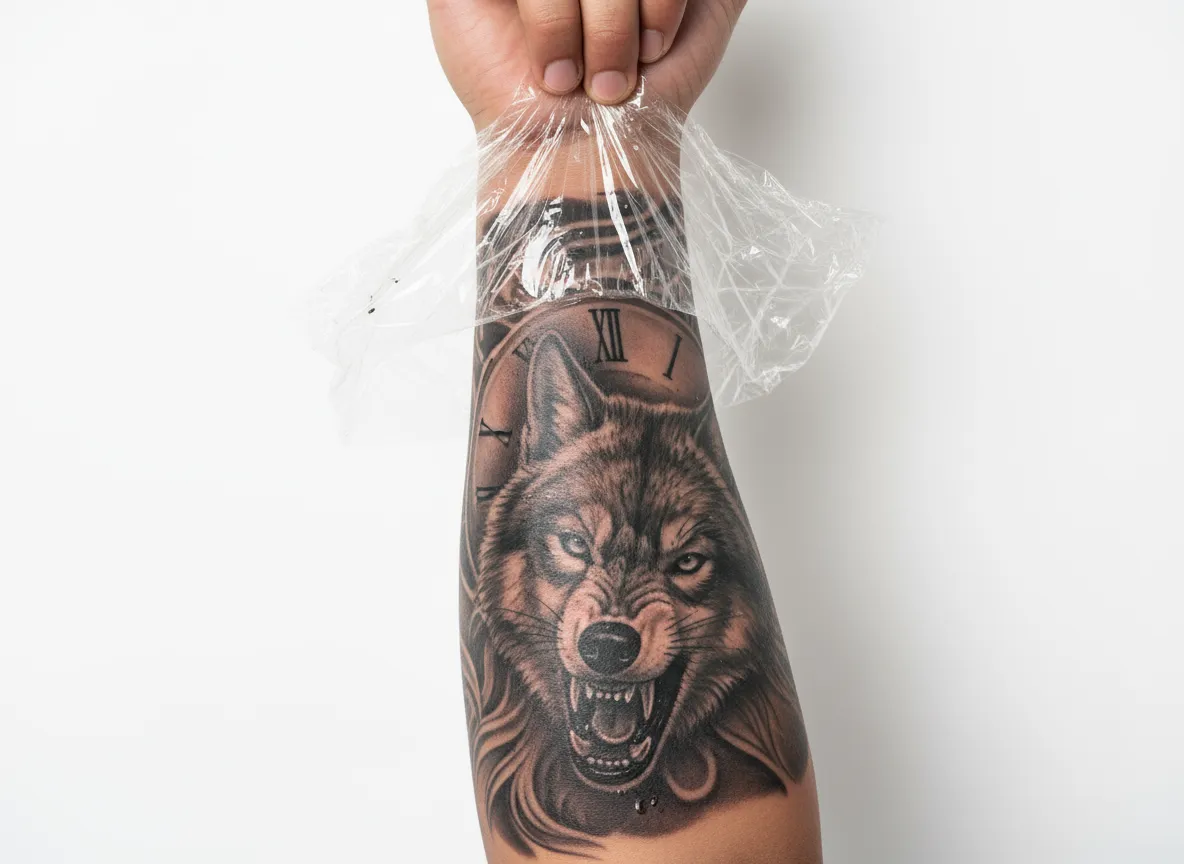
Your artist will apply either plastic wrap or a Saniderm bandage after your session. Both protect your fresh tattoo during the initial hours.
- ·Wash your hands thoroughly before touching your tattoo.
- ·Gently remove the plastic wrap or Saniderm bandage.
- ·If it sticks, use lukewarm water to loosen it — never pull it off dry.
Plastic Wrap vs. Saniderm
If your artist applied Saniderm and it's sealed well with no leaking, it can stay on for 3-5 days. If you have plastic wrap, remove it at the 2-4 hour mark. When in doubt, ask your artist.
Step 2
Cleanse Gently
2-3 times daily during healing
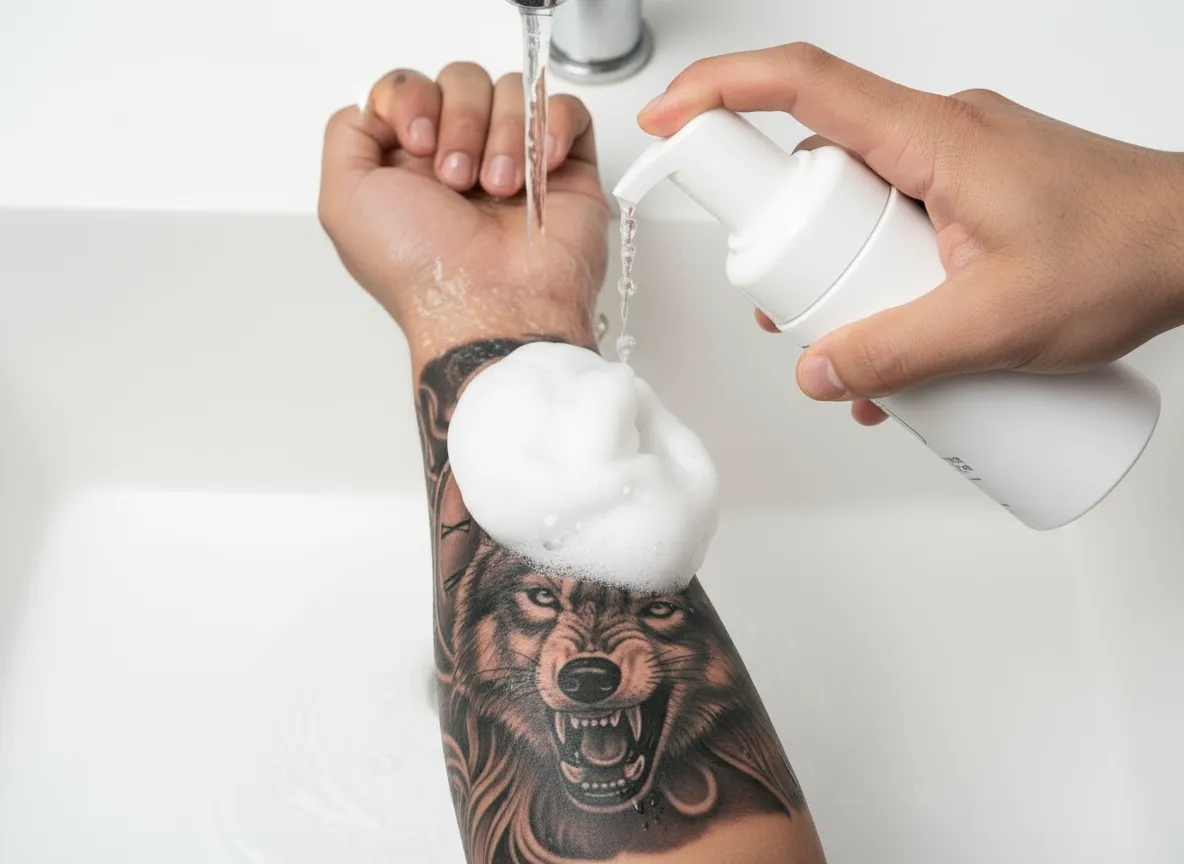
A gentle foam cleanser lifts away excess ink, plasma, and bacteria without drying or irritating your skin. Cleansing properly keeps pores clear, reduces the chance of infection, and helps your new ink heal evenly and stay vibrant.
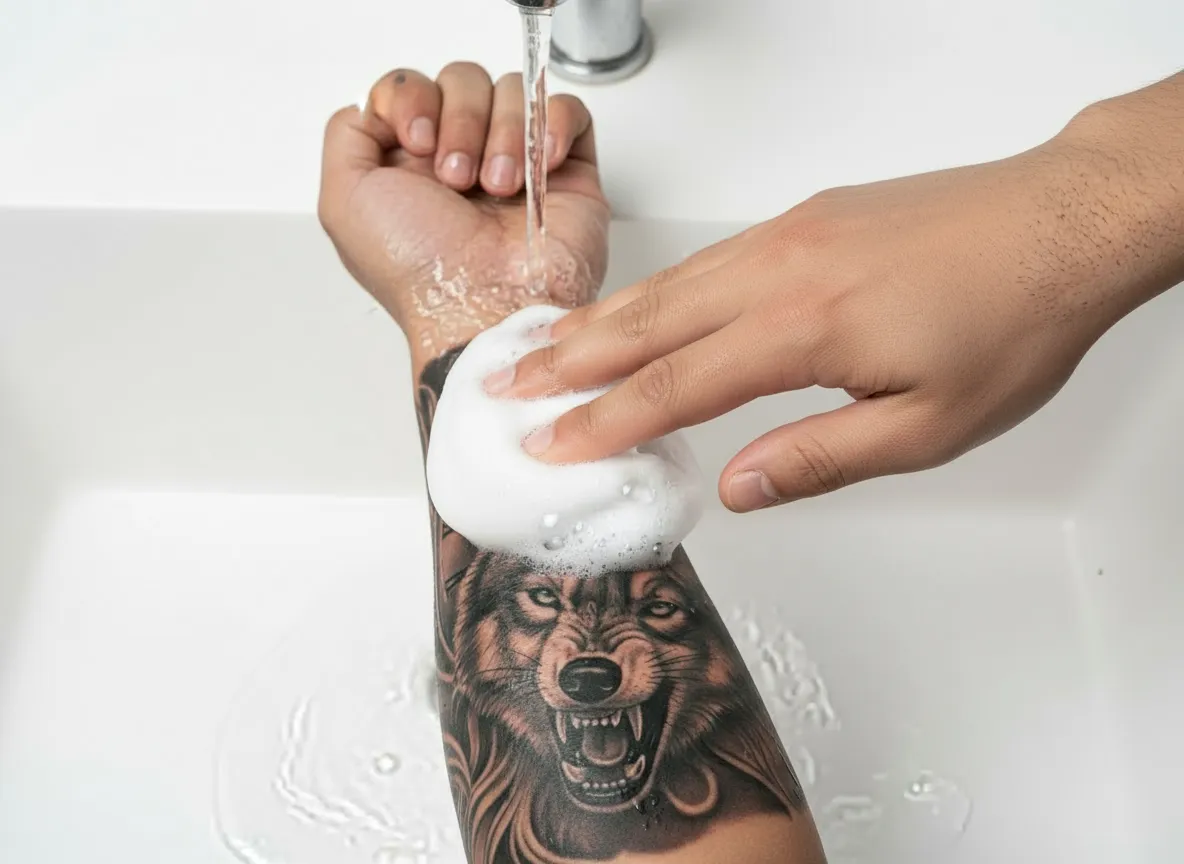
Gently Cleanse
Dispense 1-2 pumps of cleanser onto clean fingertips and softly lather over your tattoo in small circular motions.
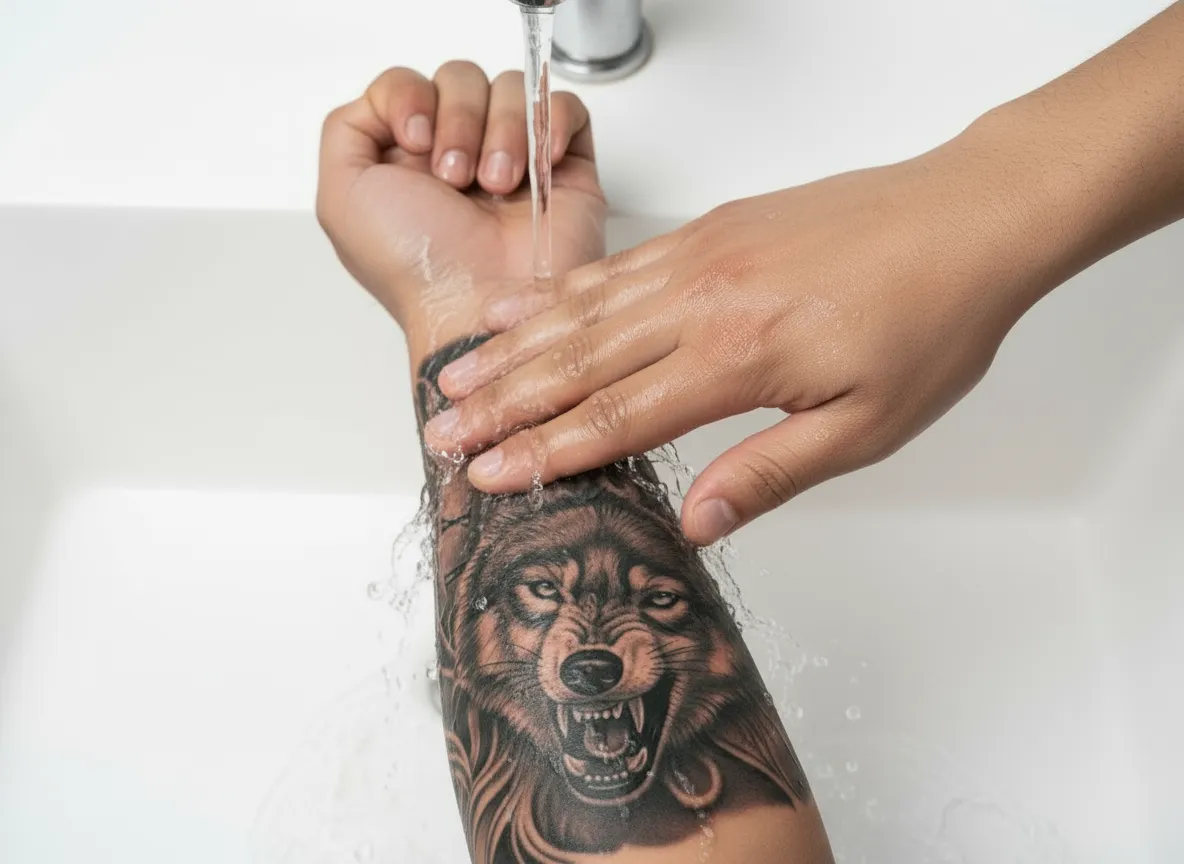
Rinse Thoroughly
Rinse with lukewarm water until all cleanser and residue are gone. Avoid hot water, which can irritate healing skin.
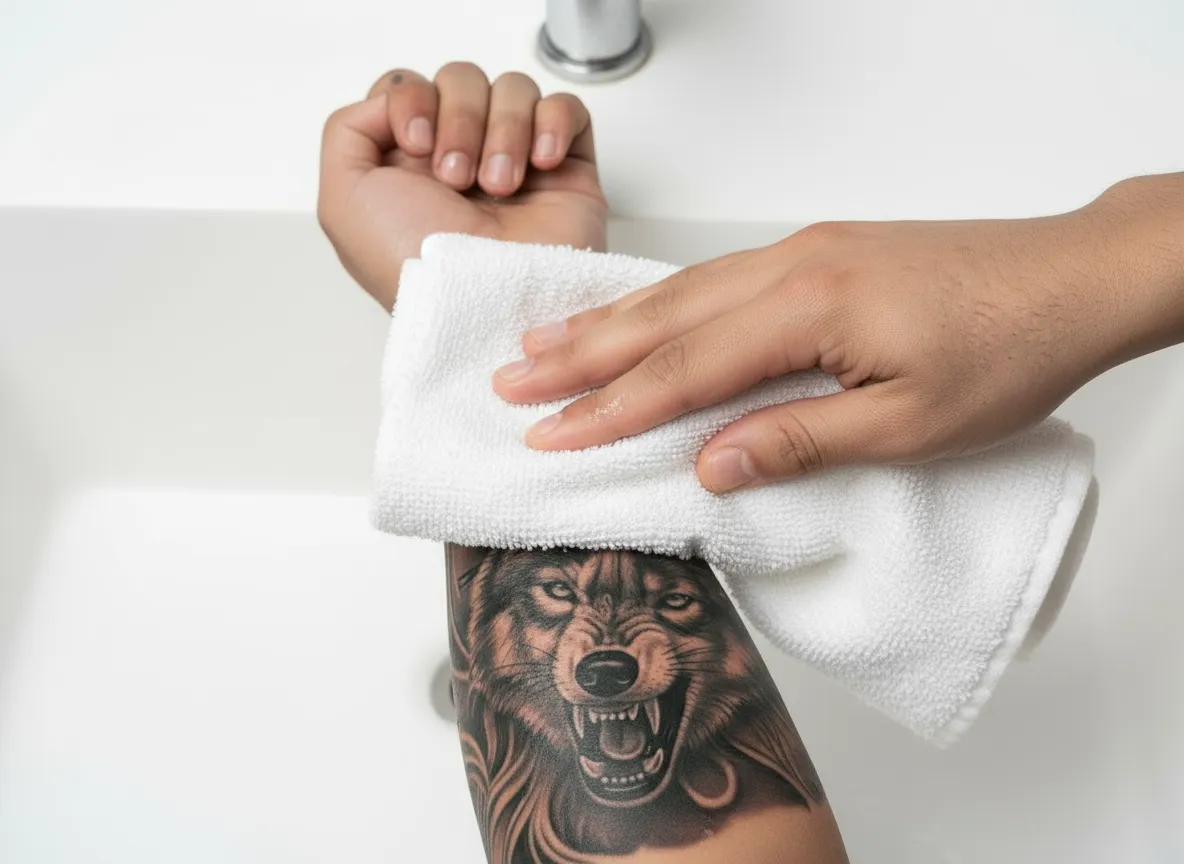
Pat Dry
Use a clean paper towel to gently pat the area dry. Never rub or reuse towels — friction and bacteria can disrupt healing.
Cleanser ingredients
Water (Aqua), Sodium C14-C16 Olefin Sulfonate, Cocamide MIPA, Cocamidopropyl Hydroxysultaine, Aloe Barbadensis Leaf Juice, Glycol Stearate, Sodium Chloride, Phenoxyethanol, Caprylyl Glycol, Citric Acid
Step 3
Protect with Ointment
First 48 hours after bandage removal
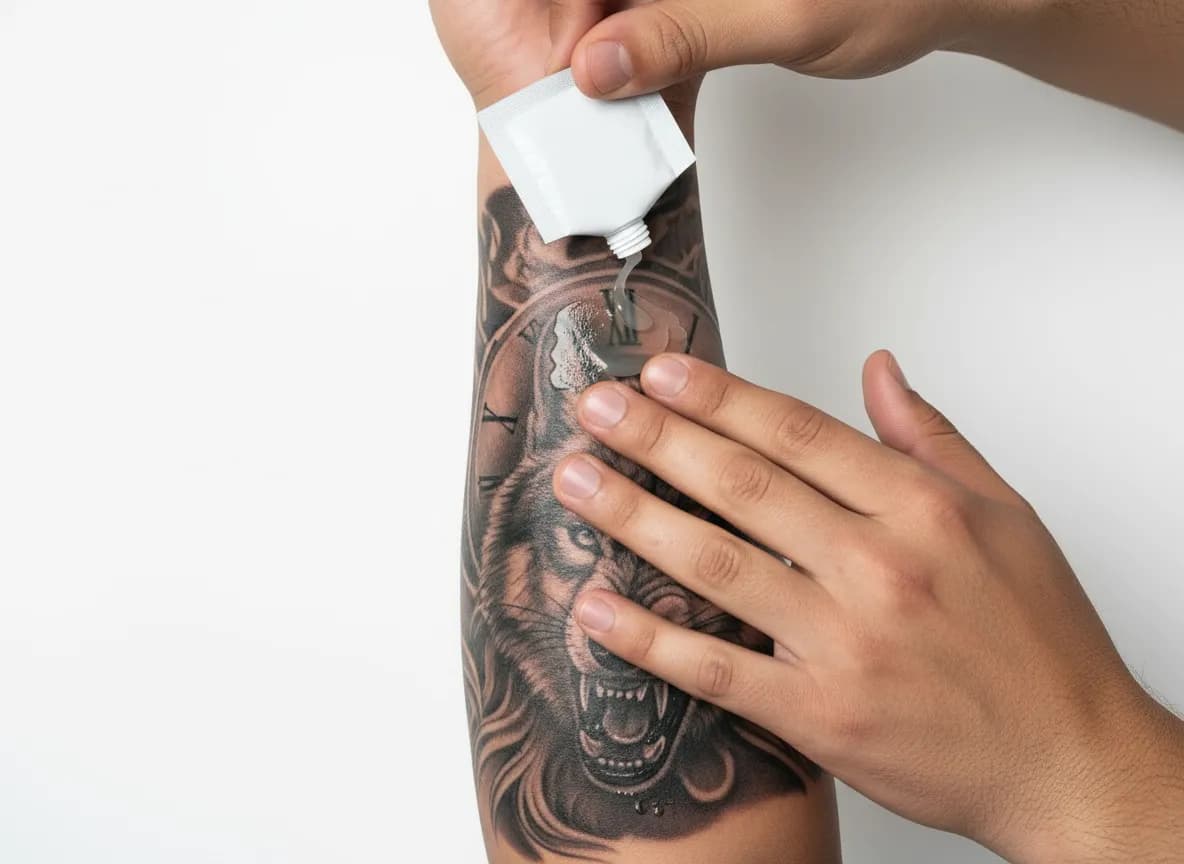
A&D ointment creates a light protective barrier that locks in moisture while shielding your tattoo from bacteria and irritation. It helps the skin begin healing safely during the most sensitive stage — the first two days after your session.
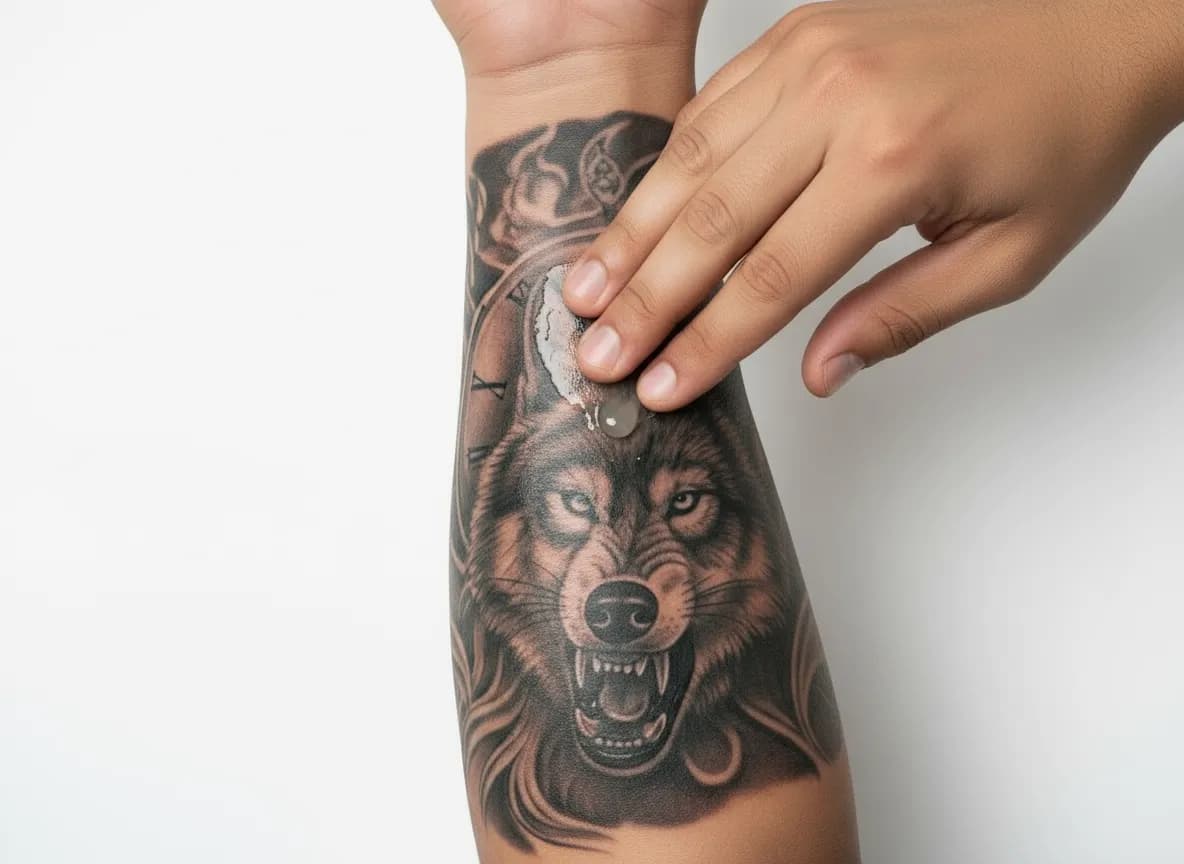
Apply Ointment
After cleansing, squeeze a pea-sized amount and gently spread until the surface looks slightly shiny but not greasy. Less is more — over-applying can trap moisture and slow healing.
A&D ointment active ingredient
Petrolatum USP (76% w/w)
Step 4
Hydrate with Lotion
After 48 hours, until fully healed (4-6 weeks)
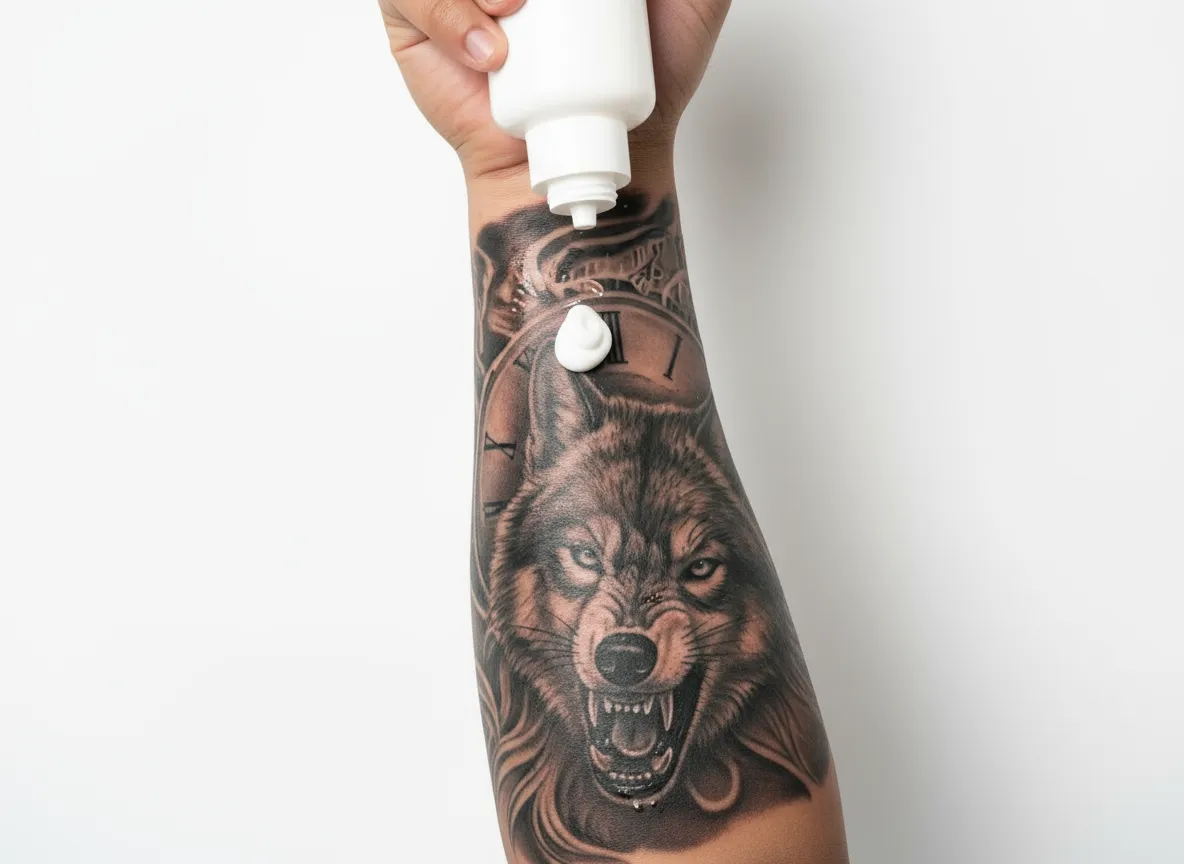
After the first 48 hours, switch from ointment to a lightweight, fragrance-free lotion to keep your healing skin soft and hydrated. It absorbs quickly to prevent dryness, cracking, and irritation while letting your tattoo breathe and heal naturally.
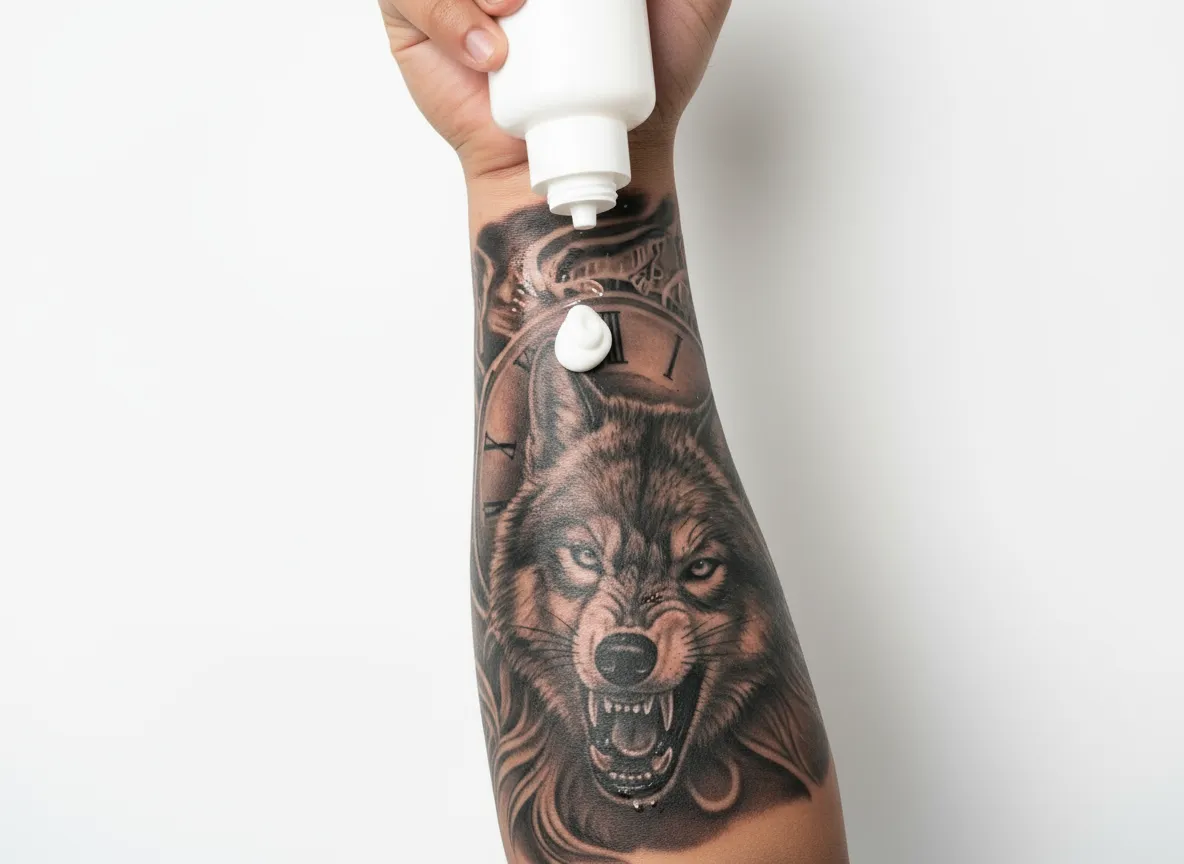
Apply Lotion
Dispense a small drop onto clean, dry skin — a little goes a long way. Too much product can clog pores or feel sticky.
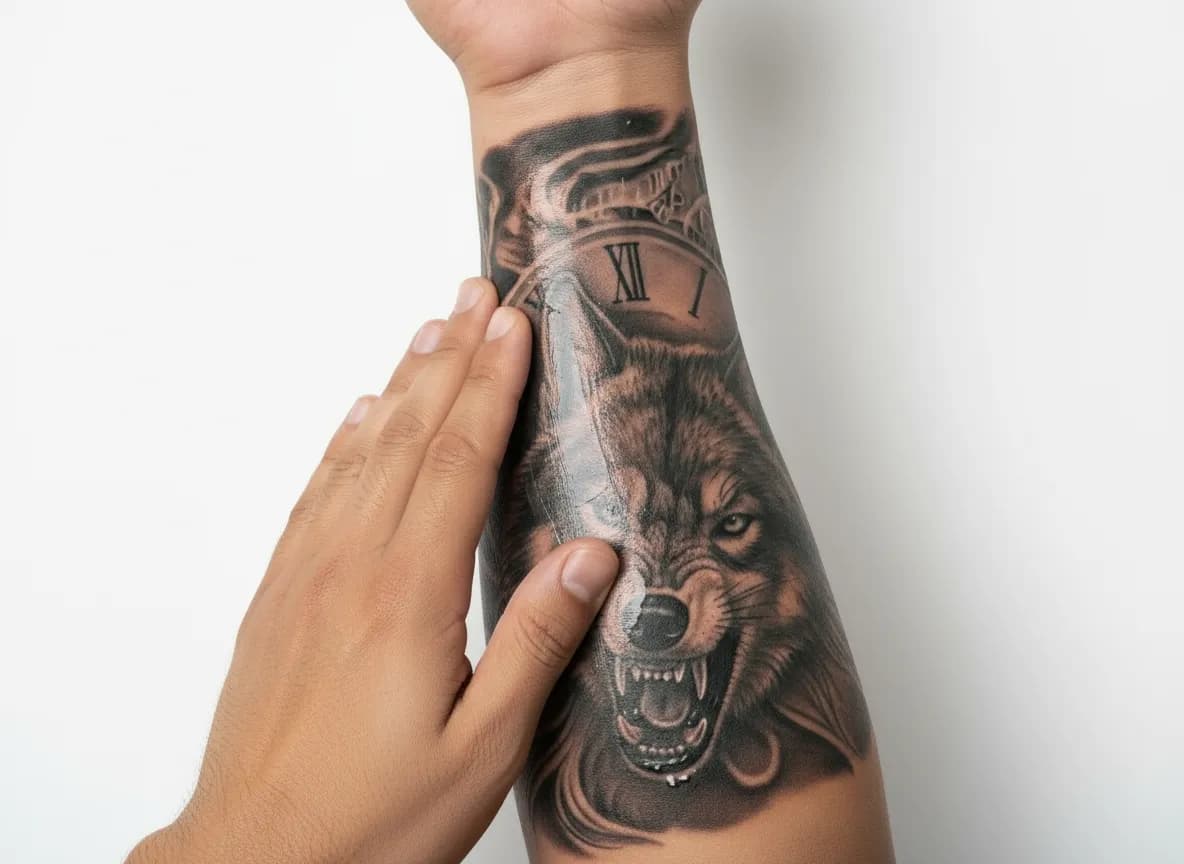
Massage In
Using clean hands, softly massage the lotion into your tattoo until fully absorbed. Your skin should feel smooth and comfortable, not greasy.
Lotion ingredients
Water (Aqua), Glycerin, Cetearyl Alcohol, Glyceryl Stearate SE, Butyrospermum Parkii (Shea) Butter, Theobroma Cacao (Cocoa) Seed Butter, Cyclopentasiloxane, Dimethiconol, Laureth-4, Laureth-23, Tocopheryl Acetate (Vitamin E), Aloe Barbadensis Leaf Juice, Polysorbate 20, Carbomer, Tetrasodium Glutamate Diacetate, Phenoxyethanol, Caprylyl Glycol
Day-by-Day Tattoo Healing Timeline
Understanding the tattoo healing process helps you know what's normal and when to take action. According to AAD.org, keeping your tattoo clean and moisturized through every phase is essential for proper healing.
Days 1-3
Open Wound Phase
Your body is starting the healing process — this is technically an open wound, so your immune system is working hard.
What it looks like
- Bright, bold, and slightly swollen
- Redness around the tattoo
- May look shiny or "wet"
- Some ink and plasma leakage (totally normal)
What it feels like
- Tender, like a sunburn
- Warm to the touch
- Slight stinging or soreness
What to do
- Gently wash with a fragrance-free cleanser
- Pat dry (don't rub)
- Apply a thin layer of A&D ointment
- Keep it clean and avoid touching
Avoid
- Tight clothing over the area
- Sweating excessively
- Submerging in water (no baths, pools, hot tubs)
Days 4-7
Peeling & Itching Phase
Your skin is regenerating and shedding the damaged top layer. This is the hardest part for most people — the itching is real.
What it looks like
- Dull or cloudy appearance
- Flaking or peeling (like a sunburn)
- Light scabbing may appear
What it feels like
- Itchy (resist the urge to scratch!)
- Less sore, more tight and dry
What to do
- Switch to fragrance-free lotion
- Keep it moisturized (not overly saturated)
- Let flakes fall off naturally
Avoid
- Scratching or picking
- Peeling skin off
- Over-moisturizing (can clog pores and slow healing)
Week 2
Surface Healing
The top layer of skin has healed, but deeper layers are still repairing. Your tattoo is getting there — don't let your guard down yet.
What it looks like
- Peeling mostly done
- Tattoo may look slightly dull or "milky"
- Skin appears more normal
What it feels like
- Minimal itching
- Less sensitivity overall
What to do
- Continue moisturizing daily
- Resume light normal activity (depending on placement)
Avoid
- Sun exposure (tattoos are very sensitive to UV right now)
- Thinking it's fully healed — it's not yet!
Weeks 3-4
Settling Phase
The deeper layers of skin finish healing and the ink settles fully into place. The tattoo healing process is almost complete.
What it looks like
- Color and detail become more vibrant again
- Skin texture returns to normal
- No more flaking or dryness
What it feels like
- Completely normal
- No itching or tenderness
What to do
- Start applying SPF 30+ if exposed to sun
- Keep skin hydrated
What to Avoid While Your Tattoo Heals
Your tattoo is a healing wound. These three rules protect it through the full tattoo healing process.
Don't Pick or Scratch
Let flakes fall naturally to prevent scarring or color loss. Picking pulls ink out of the skin and creates uneven healing. If it itches, gently pat the area or apply a thin layer of lotion.
Avoid Soaking & Heavy Sweating
Skip pools, hot tubs, saunas, and hard workouts for at least 2-3 weeks. Water, sweat, and friction can irritate or introduce bacteria to your healing tattoo. Once the skin is fully closed, you can safely return to normal activities.
Protect from Sun & Friction
Keep your tattoo covered from direct sunlight and wear loose, breathable clothing. After healing, apply SPF 30+ sunscreen daily to preserve color and detail long-term.
Signs of Infection — When to See a Doctor
Some redness, tenderness, and mild swelling are normal during the tattoo healing process. However, watch for these warning signs according to the American Academy of Dermatology:
- !Redness spreading outward from the tattoo
- !Pus or yellow/green discharge
- !Strong odor from the tattooed area
- !Skin hot to the touch
- !Fever
If any of these occur, contact your artist or a doctor promptly.
Call us at +1 (612) 255-4439 or email support@studioaz.us.
Long-Term Tattoo Care
Your tattoo aftercare doesn't end when the peeling stops. The Minnesota Department of Health recommends ongoing skin care to protect your investment.
- Full healing timeline
Most tattoos take 2-4 weeks to heal on the surface, but full internal healing takes 6-8 weeks depending on size, placement, and skin type.
- Touch-up assessment
At 40 days after your session, your artist will assess how the tattoo healed and how your skin retained the ink. In most cases, touch-ups are free if aftercare was followed.
- Sun protection
Apply SPF 30+ sunscreen to your tattoo whenever it's exposed to sun. UV damage fades tattoo ink over time — sunscreen is the single best thing you can do for long-term color retention.
- Stay hydrated
Keep your skin moisturized. Hydrated skin holds ink better and keeps your tattoo looking sharp for years.
Frequently Asked Aftercare Questions
Quick answers to common questions about how to care for a new tattoo, as recommended by AAD.org. Have more tattoo questions? Check our full FAQ.
Can I exercise after getting a tattoo?
Wait at least 48 hours before any strenuous exercise. Sweat contains bacteria and salt that can irritate a fresh tattoo. After 48 hours, light activity is fine — just avoid anything that causes heavy sweating or friction on the tattooed area. Return to full workouts after 2-3 weeks when the surface is healed.
When can I go swimming after a tattoo?
Wait at least 2-3 weeks before swimming. Pools, hot tubs, lakes, and oceans all introduce bacteria and chemicals (like chlorine) that can damage a healing tattoo. Once there's no open skin or flaking, you can safely submerge. Always rinse off and moisturize after swimming once you resume.
How do I sleep with a new tattoo?
Sleep on the opposite side of your tattoo to avoid pressure and friction. Use clean sheets (change them more frequently during healing). If the tattoo is in a spot that's hard to avoid, wrap it loosely in clean plastic wrap for the first 1-2 nights only. After that, let it breathe.
Is it normal for my tattoo to peel?
Yes, peeling is completely normal and a sign your tattoo is healing properly. It usually starts around days 4-7 and looks similar to a sunburn peel. The flaking skin may contain some ink color — this is expected. Never pick or pull the peeling skin. Let it shed naturally to preserve the detail and vibrancy of your tattoo.
Have more questions? Read our FAQ or reach out to Studio AZ Tattoo.
Need a tattoo touch-up service? Contact us after 40 days of healing.
Deposits start at $50 and are fully refundable with 48-hour notice.
Book Your Next Tattoo